

In a nutshell:
- Artificial intelligence is transforming online marketing faster than most tools can keep up with—content workflows, ad automation, SEO analysis, personalization.
- We’ll show you exactly which AI applications work for SMEs, where they’re overrated, and how to build a future-proof marketing stack.
In recent years, artificial intelligence (AI) has become a hotly debated topic in the online marketing industry. AI has the potential to fundamentally transform customer interactions. By leveraging AI technologies, businesses can enhance their customer experiences and gain a competitive edge.
In this blog post, you’ll learn why AI is so important for online marketing and what impact it’s having on the industry.
What is AI Marketing?
AI marketing refers to the creation of marketing campaigns using artificial intelligence. This is sometimes also called machine learning for marketing. These AI marketing tools help advertising agencies and marketing teams create more effective campaigns by analyzing vast amounts of data and turning it into actionable insights.
From AI image generators to SEO tools to analytics—artificial intelligence is increasingly transforming the digital landscape. Marketing trends can be identified more easily, and campaigns can be tailored precisely to the target audience, making them more efficient and successful.
What is the difference between machine learning and artificial intelligence?
The terms “artificial intelligence (AI)” and “machine learning (ML)” are often used interchangeably. However, there are some differences. While both involve quite complex processes, machine learning is only one part of artificial intelligence. Using collected data, machine learning identifies patterns and insights that make AI even smarter.
Artificial intelligence, on the other hand, refers to programs that simulate human abilities—such as writing, painting, or speaking. AI programs can also act independently. This makes it possible to use chatbots for communicating with and advising customers. Or it enables the creation of images based on descriptions.
The combination of machine learning and artificial intelligence is also highly effective in digital marketing, as real-time data is transformed into tangible results. At the same time, artificial intelligence is constantly evolving, as it is fueled by machine learning.
Is AI the future of digital marketing?
Many AI tools help make campaigns more effective. Therefore, it is expected that artificial intelligence will be increasingly used in digital marketing in the coming years.
AI can help improve customer experiences
One of the biggest advantages of AI is that it can help companies improve customer experiences. By leveraging technologies such as machine learning and natural language processing, companies can better address their customers’ needs and offer them personalized experiences.
This includes, for example, chatbots that can advise customers in real time and help with problems. Chatbots can simultaneously collect data on customer interactions and draw conclusions from them that train the artificial intelligence. AI also helps identify trends, thereby improving the marketing process.
Improving customer experiences is crucial to a company’s success. According to a study by Bain & Company, companies that focus on improving customer experiences can achieve revenue growth 4–8% above the market average. Improved customer experiences also foster loyalty and customer value.
By leveraging AI, companies can not only increase their revenue but also build long-term relationships with their customers.
AI can help increase website traffic
Another benefit of AI is that it can help companies increase website traffic. By leveraging AI technologies such as search engine optimization (SEO) and social media marketing (SMM), companies can improve their website rankings and thus generate more traffic.
Improving traffic is crucial to a company’s success. The higher a website appears in search results, the higher the click-through rate. This means that companies with high traffic also have a higher conversion rate.
AI can therefore not only help increase traffic to a website but also help attract new customers.
AI SEO tools such as Google Search Console, Surfer SEO, and Semrush help marketers analyze their target audience’s search behavior so that content can be perfectly tailored to that audience. These programs are useful for keyword research, link building, and on-page optimization.
AI in Social Media Marketing
Artificial intelligence is also helpful in social media marketing for creating content that is tailored to the target audience and published at the right time.
Artificial intelligence now also makes it easier to automatically generate simple content. To do this, social media AI programs only need a blog post or an interview to transform it into a post for Instagram, Twitter, and other platforms.
Generating ideas for campaigns is greatly facilitated by analyzing website traffic, trends, and social media metrics.
AI tools are also helpful when planning social media posts. For example, they help plan, create, and analyze posts. This saves time and energy, but also makes social media campaigns more successful.
AI can also access news and turn it into posts. This allows businesses to offer customers products tailored to the moment—for example, umbrellas when it’s raining or sunscreen when UV levels are high.
AI improves audience management
While artificial intelligence (AI) is still viewed as an exotic and expensive experiment in many companies, some pioneers are already harnessing the power of AI for their online marketing.
Thanks to AI, it is now possible to reach the target audience with a precision that was previously unimaginable.
The introduction of artificial intelligence into online marketing improves not only customer engagement but also target audience management. By using AI-based tools, companies can better understand their customer data and thus reach the right customers for their products or services.
In the past, it was often difficult for companies to know exactly which customers were most likely to be interested in their products or services. This was primarily because it was difficult to collect the right customer data and then interpret that data correctly. With the help of artificial intelligence, it is now possible to significantly improve these processes.
AI also makes it possible to accurately measure the success of marketing campaigns and make immediate improvements. Thanks to AI, it is now possible to measure the impact of campaigns in real time and react immediately to changes. This means that companies can use their marketing budgets more effectively and respond more quickly to changes.
All of this means that AI has the potential to fundamentally transform online marketing. AI enables marketers to target their audience more precisely and better measure the success of their campaigns. In the future, AI will have an increasing influence on online marketing and enable companies to use their marketing budgets more effectively.
AI can help increase return on investment
Another major advantage of AI is that it can help companies increase their return on investment (ROI). Since AI programs help analyze trends, target audiences, and other data, advertising campaigns become significantly more efficient because they are based on hyper-personalized offers and recommendations. This increases the likelihood that a product will be purchased, which in turn boosts the company’s ROI.
Artificial Intelligence Strengthens Customer Loyalty
In recent years, the possibilities that artificial intelligence (AI) offers for online marketing have evolved significantly. AI systems are already being used successfully in many companies today to strengthen customer loyalty. By using AI, companies can communicate in a more targeted and personalized way, thereby increasing customer satisfaction.
AI systems can analyze customer data to gain insights into customer needs. Based on these insights, companies can then take targeted measures to boost customer satisfaction. For example, they can send personalized offers or information to customers. This makes customers feel valued and keeps them loyal to the company.
More and more companies are also turning to AI for social media. By using AI systems, social media managers can better understand which content resonates with users and which does not. This allows them to create more targeted content that boosts customer satisfaction and strengthens customer loyalty.
AI Image Generators
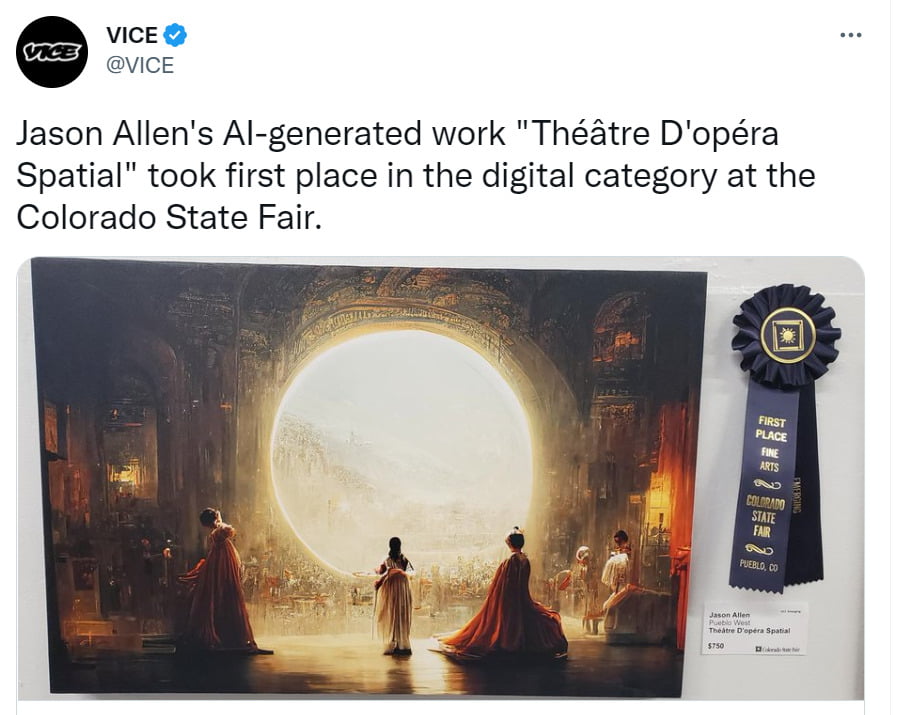
Artificial intelligence is now also capable of creating images. AI image generators like Dall-E or Midjourney are so successful that the images created with them are winning art competitions.
The image “Théâtre D’opéra Spatial” was awarded first prize at an art exhibition in Colorado in August 2022. The artist, James Alten, had created the image using Midjourney’s AI. However, he did not want to reveal the prompt he used to create the image.
While AI image generators are now incredibly effective, it wasn’t long ago that the internet was making fun of an image showing salmon fillets floating in water. The image quickly went viral on Twitter and LinkedIn. A few hours later, however, tests showed that the AI had since learned to distinguish between a salmon and a salmon fillet.

AI image generators are highly sought after by corporations and investors. TikTok is working on its own image generator, which is now available in a rudimentary form on TikTok. Users can generate background images for their videos by entering text. Several startups, such as Stability AI from London and Midjourney from San Francisco, are also striving to get a piece of the pie. Despite fierce competition, Stability AI has no shortage of investors. Two years after its founding, the startup received an investment offer from Lightspeed Venture Partners worth over one billion U.S. dollars.
Image generators will bring about some changes in marketing in the coming years, as they are having a significant impact on the stock photography market. Many AI algorithms also use copyrighted images in their image generators. While this is legal in the U.S., it may violate the General Data Protection Regulation in Europe, as, for example, the consent of the people depicted is required.
Image generators will also cause quite a stir in journalism. Although the ability to manipulate images is nothing new, AI image generators make the creation of so-called deepfakes much easier than Photoshop and similar tools. The German Press Agency (DPA) therefore clearly rejects images created with AI.
How AI writing software is changing digital marketing
The use of artificial intelligence in producing blog articles can help create better and more targeted content. Through thorough data analysis, AI software can produce content tailored to the company’s target audience. This can lead to a higher conversion rate.
The AI software neuroflash creates not only text but also images. With neuroflash, advertising copy can be written in German.
AI Video Generators in Marketing
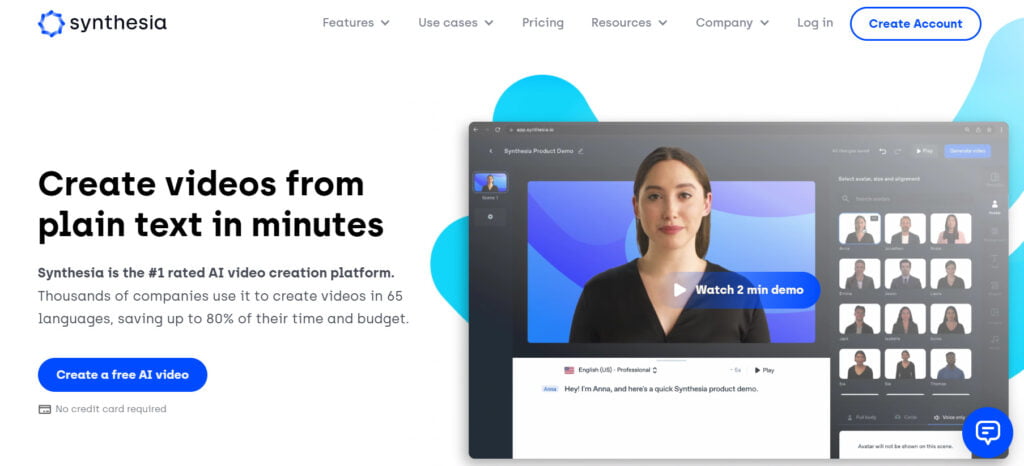
Companies like Google and Meta are already working on AI video generators that can create video clips from text commands. Programs like Synthesia can already produce videos of any length. The startup was founded in 2017 and has set itself the goal of transforming content creation and marketing. For example, users can enter keywords, from which the generator then creates a coherent video. Synthesia also works with music and sound effects, which make the video even more interesting.
You are currently viewing placeholder content from YouTube. To access the actual content, click the button below. Please note that this will result in data being shared with third parties.
More informationAI voice generators in online marketing
Not only text and videos, but also voices can now be generated by artificial intelligence. Using recorded voice samples, AI programs can create a simulation of human speech. In online marketing, this can be particularly useful for voiceovers in videos. AI voice generators have the potential to save not only time but also money when producing an advertising campaign.
AI in Affiliate Marketing
Artificial intelligence is also used in affiliate marketing. Affiliate marketing is primarily used by bloggers who benefit from product recommendations. In this area of marketing, AI can use machine learning and analysis of new pages to place targeted advertisements. The ad that appears on the target audience’s screen has a higher conversion rate.
Conclusion: AI is the future of online marketing
Artificial intelligence is an essential component of modern online marketing. By using AI, companies can fully leverage their marketing potential and respond more effectively to their customers’ needs. Artificial intelligence enables companies to better analyze their customer data and thereby design personalized and relevant marketing campaigns. The automation of marketing processes through AI also saves companies a significant amount of time and money.
However, it is important that companies do not view the use of AI as a panacea. Rather, they should see AI as a supportive tool that helps them achieve their marketing goals. Only then can they truly benefit from the advantages of AI and succeed in the digital world.