

TL;DR
- The BFSG has been in effect since June 2025, but many SMEs only comply with it superficially.
- Compliance with the WCAG 2.1 AA standards is mandatory for websites, online stores, and apps.
- Implement audits, CMS adjustments, content updates, and regular testing.
- Failure to comply may result in penalties, especially in regulated industries.
In a nutshell:
- The Accessibility Enhancement Act has been in effect since June 2025—but many SME websites do not meet the requirements, or only do so superficially.
- We’ll show you exactly which steps you need to take after the BFSG goes into effect, which tools can help, and what you can realistically expect if you receive a warning letter.
Starting June 28, 2025, digital accessibility will become mandatory in Germany. The Accessibility Enhancement Act (BFSG) sets new standards that companies must comply with to avoid fines or market bans.
Key points at a glance:
- Areas affected : Websites, apps, e-commerce, payment terminals.
- Requirements : Implementation of WCAG 2.1 AA standards (including perceivability, operability, understandability, and robustness).
- Exceptions : Micro-enterprises (fewer than 10 employees, under €2 million in revenue).
- Deadline : Implementation by June 2025, including an accessibility statement.
- Consequences : Penalties for non-compliance, particularly in regulated industries such as banking.
How to prepare?
- Conduct an accessibility audit.
- Integrate accessibility features into CMS systems (e.g., WordPress plugins).
- Optimize content (clear language, structured headings).
- Conduct regular tests using tools such as Lighthouse or screen readers.
Conclusion: Take action now to meet legal requirements in a timely manner and make digital offerings accessible.
The Accessibility Enhancement Act – BFSG
You are currently viewing placeholder content from YouTube. To access the actual content, click the button below. Please note that this will result in data being shared with third parties.
2025 Accessibility Regulations
The Accessibility Enhancement Act (BFSG) and international standards will introduce new requirements for digital accessibility in Germany starting in 2025. These requirements apply to both companies and developers and will necessitate extensive adjustments.
Accessibility Strengthening Act (BFSG)
The BFSG, which takes effect on June 28, 2025, transposes the European Accessibility Act (EAA) into German law [1]. For the first time, private companies are legally required to ensure digital accessibility [4].
The regulations apply to digital products, websites, web applications, e-commerce platforms, and payment terminals.
Exception: Micro-enterprises with fewer than 10 employees and an annual turnover and balance sheet total of less than 2 million euros are exempt from the requirements [5].
WCAG and BITV Standards
The BFSG is based on EN 301 549, which incorporates the WCAG 2.1 AA standards with 62 criteria for accessible web content [2]. The BITV supplements these requirements specifically for Germany.
| Principle | Requirements and Examples |
|---|---|
| Perceptibility | Screen reader support, sufficient contrast |
| Operability | Intuitive menu navigation, keyboard operation |
| Comprehensibility | Clear language, well-organized structure |
| Robustness | Compatibility with assistive technologies, responsive design |
Companies and developers must begin implementation early to comply with the requirements. Starting in 2025, an accessibility statement will also be required for affected websites [1]. Violations can result in fines and market bans, particularly in regulated industries such as the banking sector [2].
Regular testing with assistive technologies is essential. The next section outlines specific measures and tools that can help meet these requirements.
Steps to Ensure Website Accessibility
Implementing accessibility on websites requires a well-thought-out approach and the use of appropriate tools. Here you’ll learn how to make your website BFSG-compliant.
Accessibility features in CMS systems
Many content management systems (CMS) already offer features that support accessibility. Systems like WordPress and TYPO3 provide built-in tools that make implementation easier.
| CMS | Built-in features | Recommended extensions |
|---|---|---|
| WordPress | – Optimization for images and text – Keyboard navigation |
– WP Accessibility – Accessibility Checker |
| TYPO3 | – Accessible backend – Semantic output structure |
– WCAG Validator – Contrast Checker |
The choice of a CMS theme also plays an important role. Make sure the theme is WCAG 2.1 AA-compliant and supports responsive design. In addition to CMS features, additional tools are needed to fully implement accessibility.
Tools and Techniques for Implementation
To effectively ensure accessibility, you should consider the following steps:
1. Initial Analysis
- Perform an automated check using tools like Lighthouse.
- Identify any fundamental issues.
- Test the results with screen readers such as NVDA or JAWS.
2. Technical Improvements
- Use clean HTML and ARIA labels to optimize the technical structure.
- Ensure that keyboard navigation works and that the design is responsive.
- Ensure that your website is compatible with assistive technologies.
3. Content Optimization
- Structure your content clearly and use simple language.
- Use descriptive links and well-organized headings in accordance with WCAG guidelines.
- Integrate regular accessibility checks into your development process.
A combination of automated and manual checks ensures that all requirements are met. With the June 2025 deadline in mind, companies should definitely prioritize these steps to be prepared in time.
Strategies for Implementing Accessibility
To effectively implement accessibility, the targeted use of modern technologies and tools is crucial. With the upcoming BFSG requirements taking effect in June 2025, companies must adapt their digital offerings accordingly.
Accessibility Plugins for WordPress and TYPO3
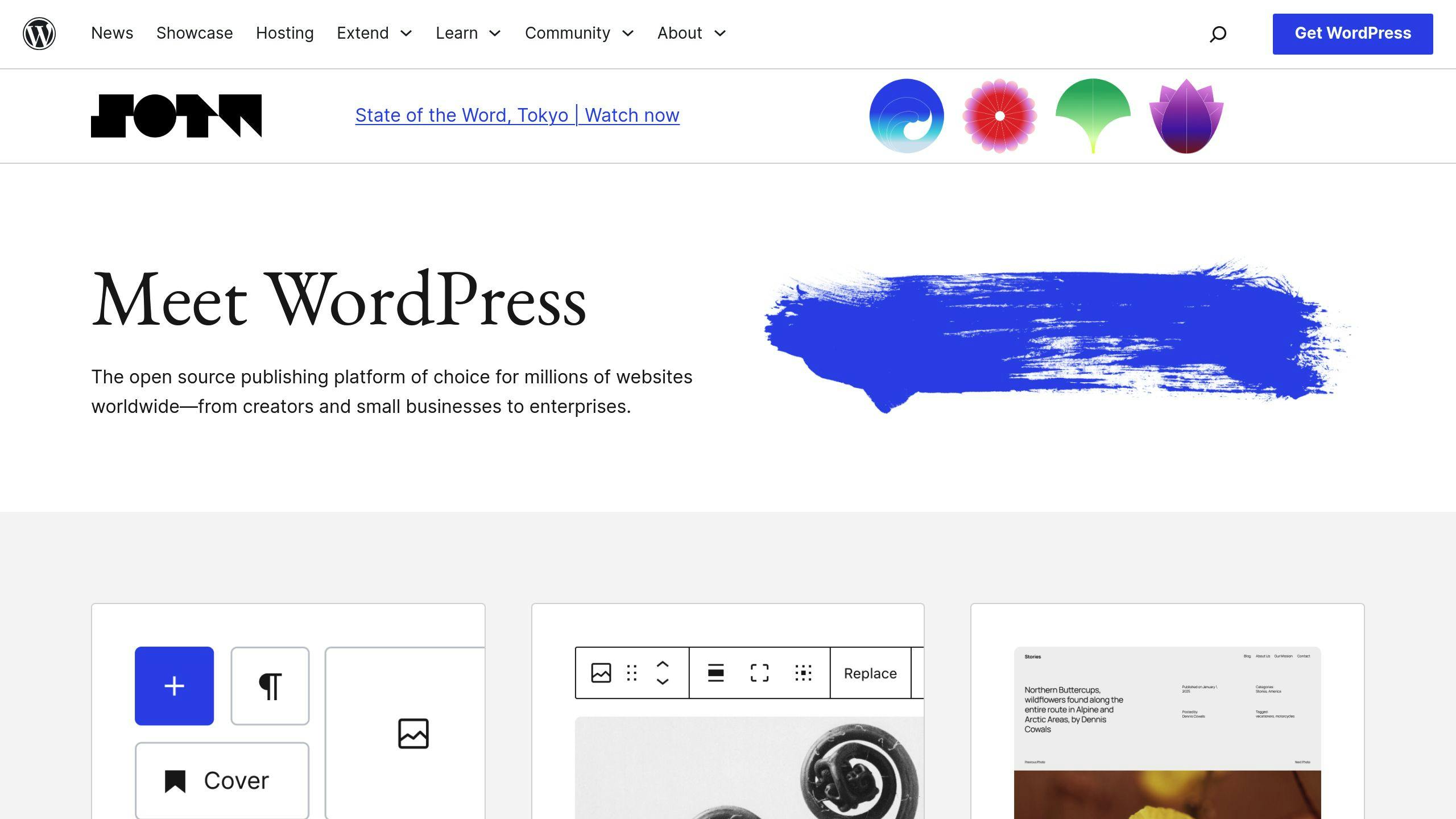
Integrating accessibility into content management systems (CMS) is made easier by specialized plugins. Here are some of the best solutions for WordPress and TYPO3:
| CMS | Plugin/Extension | Key Features | Key Features |
|---|---|---|---|
| WordPress | WP Accessibility | – WCAG checks – Real-time feedback – PDF accessibility |
Integration into the editorial workflow |
| WordPress | Accessibility Checker | – Audit reports – WCAG 2.1 AA compliance – Automatic corrections |
Multilingual support |
| TYPO3 | TYPO3 Accessibility | – Structured HTML code – ARIA labels – Contrast checker |
Optimized for TYPO3 v11+ |
| TYPO3 | WCAG Validator | – Live validation – Accessibility checklists – Documentation |
Automated reporting |
These plugins make it easier to comply with WCAG guidelines and assist in creating the accessibility statement [1].
Plugins provide a solid foundation, but AI-powered tools can further automate and improve the process.
AI-powered accessibility tools
Artificial intelligence is transforming the approach to accessibility through automated analysis and optimization. It complements CMS plugins and offers additional options for more comprehensive testing.
What AI tools can do:
- Automatic detection of accessibility issues
- Image analysis with suggestions for alt text
- Optimization of contrast and content
- Improvement of audio content through speech recognition
"Integrating AI-powered accessibility tools into the development process can increase the efficiency of accessibility testing by up to 60%."
Starting in 2025, government market surveillance will verify compliance with regulations [2]. Regular testing and adjustments are therefore essential to meet requirements in the long term.
Conclusion: Preparing for Accessibility 2025
Key Points
Starting in 2025, digital accessibility will be required by law. Even though micro-enterprises are not directly affected, all users—regardless of potential limitations—benefit from accessible digital offerings [1].
Implementing the WCAG guidelines and adapting existing systems requires a clear strategy. It is particularly crucial to plan early and implement the measures step by step [2].
Steps for Businesses
To meet legal requirements, companies should begin implementation as early as possible. A structured plan can help:
| Timeline | Action | Goal |
|---|---|---|
| Q1–Q2 2025 | Conduct audit | Identify vulnerabilities |
| Q2 2025 | Implement plugins | Establish technical foundation |
| Q2–Q3 2025 | Employee training | Build knowledge |
| Ongoing | Regular tests | Ensuring compliance |
In addition to integrating accessibility features into development processes, creating an accessibility statement is an important step [1]. Companies should take action now, as government market surveillance will begin monitoring compliance with regulations starting in 2025 [2].
Accessibility is not only a legal obligation but also an opportunity to reach new target groups and strengthen brand perception. Companies that incorporate accessibility into their strategy benefit from improved user-friendliness and higher customer satisfaction—well beyond the requirements of 2025 [3].
FAQs
What is the European Digital Accessibility Act?
The European Accessibility Act (EAA) was implemented in Germany through the Accessibility Enhancement Act (BFSG). The regulations for digital products and services will take effect on June 28, 2025 [1].
Which companies are affected by the BFSG?
The BFSG applies to all companies except micro-enterprises (fewer than 10 employees and less than €2 million in revenue). While B2C companies must meet all requirements, the obligations for B2B companies depend on their respective business models [4].
What are the most important standards?
The WCAG 2.1 AA standards form the basis. They comprise 62 criteria relating to perceivability, operability, understandability, and robustness [2]. These standards define the minimum requirements for digital accessibility under the BFSG.
What are the consequences of non-compliance?
Starting in 2025, violations of the BFSG can result in fines, market bans, or additional requirements. Highly regulated industries such as banking are particularly affected by this [2].
How can companies prepare?
Recommended measures for companies:
- Conducting an accessibility audit
- Implement the WCAG guidelines
- Regular accessibility reviews
- Provide an accessibility statement [1]
These steps are essential to comply with legal requirements starting in June 2025 and to make digital offerings accessible.
<script async src="https://app.seobotai.com/banner/banner.js?id=6777ce223f06fdc5a701c0e6"></script>