

In a nutshell:
- A content strategy without a customer journey is like guessing in the dark—if you produce content based on gut feeling, you’ll burn through your budget.
- We’ll show you how to map content formats to the individual stages of the customer journey, which metrics really matter for each stage, and how to turn that into a content strategy that generates leads.
Content marketing is an indispensable tool for you and your business today if you want to effectively reach and retain your target audience. By strategically distributing informative, entertaining, or advisory content, you not only increase brand awareness but also earn your customers’ trust.
The Customer Journey and Content Marketing
The customer journey describes the entire process your customer goes through—from the first interaction with your brand through to the purchase and beyond. This journey can be divided into several phases, each requiring specific content strategies:
- Awareness:
- Your customer recognizes a problem or need.
- Suitable content: Blog posts, infographics, social media content, videos
- Goal: Grab attention and spark interest
- Consideration:
- Your customer is considering various solutions.
- Suitable content: e-books, webinars, case studies, detailed blog articles
- Goal: Inform and build trust
- Decision:
- Your customer makes their purchasing decision.
- Suitable content: Product demos, testimonials, comparison charts, detailed guides
- Goal: To persuade and motivate action
- Post-Purchase:
- Your customer uses the product and provides feedback.
- Suitable content: Follow-up emails, user manuals, tutorials, exclusive offers
- Goal: Ensure customer satisfaction and strengthen long-term loyalty
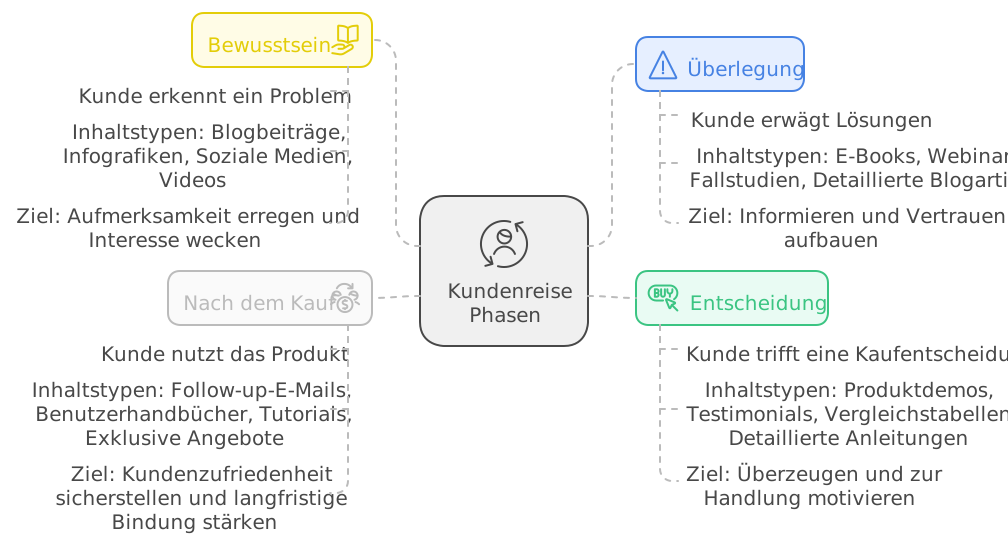
Content marketing plays a crucial role in each of these phases by providing relevant and valuable content that accompanies the customer on their journey.
Best Practices for Content Creation in Content Marketing
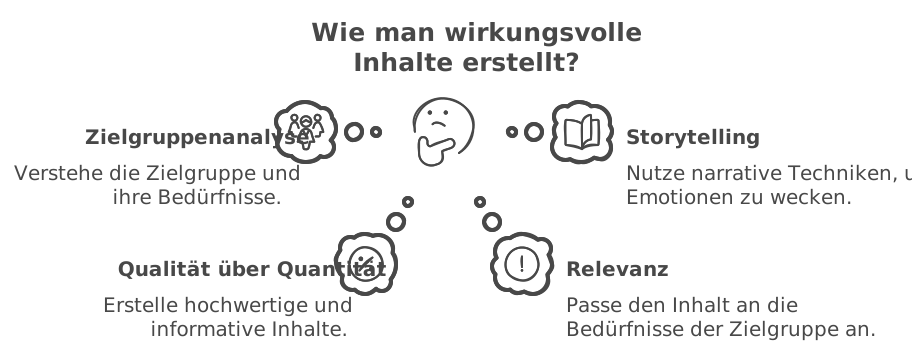
To develop an effective content marketing strategy, you should follow these best practices:
- Target audience analysis: Gain a comprehensive understanding of your target audience. What problems do they face? What solutions are they looking for?
- Storytelling: Use narrative techniques to create emotional connections and make complex information accessible.
- Quality over quantity: Create well-researched, professionally designed content that offers real added value.
- Relevance: Ensure your content is tailored to the specific needs of your target audience.
- Visual elements: Use images, videos, and infographics to reinforce your messages and make them visually appealing.
- Authenticity: Be authentic and transparent in your communication to build trust.
- Variety of formats: Use different content formats such as blog posts, videos, podcasts, and e-books to cater to your target audience’s diverse preferences.
Distribution and Promotion of Your Content
A well-thought-out distribution strategy is crucial for getting your content in front of your target audience:
- Multi-channel strategy:
- Own channels: Website, blog, email newsletter
- Earned media: Mentions in relevant blogs or online magazines
- Paid media: Advertising campaigns on platforms such as Google Ads or Facebook Ads
- SEO optimization:
- Keyword research and integration
- On-page SEO: Optimization of titles, meta descriptions, and headings
- Backlink building through high-quality content and guest posts
- Social media marketing:
- Developing platform-specific strategies
- Regular interaction with the community
- Using storytelling elements to boost engagement
- Influencer marketing:
- Collaborate with authentic influencers in your niche
- Focus on long-term relationships rather than one-off campaigns
- Viral campaigns:
- Creating emotional or surprising content
- Provide easy sharing options

Measuring success: KPIs and tools
To measure the success of your content marketing efforts, you should use the following KPIs and tools:
Key performance indicators (KPIs):
- Page views
- Time on site
- Bounce rate
- Social interactions (likes, shares, comments)
- Lead generation
- Conversion rate
Useful tools:
- Google Analytics: For comprehensive website analytics
- HubSpot: Integrated marketing tool with CRM system
- SEMrush: For SEO performance and competitive analysis
- BuzzSumo: For identifying trends on social media
B2B vs. B2C Content Marketing
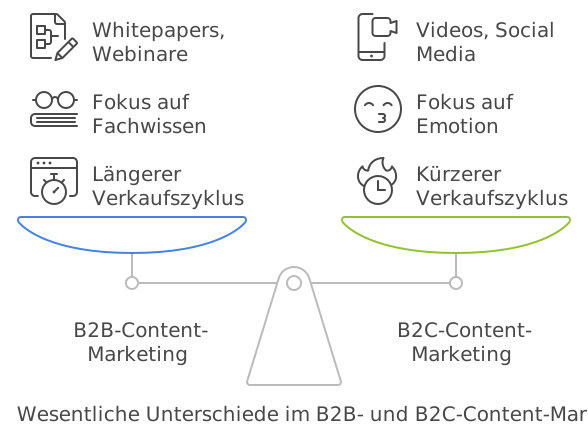
Content marketing differs depending on whether you operate in the B2B or B2C sector:
B2B Content Marketing:
- Longer sales cycle
- Focus on technical expertise and detailed information
- Formats: White papers, case studies, webinars
- Goal: Long-term relationship building
B2C Content Marketing:
- Shorter sales cycle
- Focus on emotional appeal and entertainment
- Formats: Videos, social media posts, interactive content
- Goal: Quick decision-making and brand loyalty
Challenges and Solutions
The following challenges may arise when implementing a content marketing strategy:
- Time commitment:
Solution: Use an editorial calendar and rely on a team of specialists. - Understanding the target audience:
Solution: Create detailed buyer personas and use analytics tools. - Content distribution:
Solution: Develop a clear distribution strategy and use automation tools. - Measuring success:
Solution: Define clear KPIs and use analytics tools for evaluation. - Competitive pressure:
Solution: Focus on your niche and create unique, high-quality content.
Conclusion
A well-thought-out content marketing strategy that spans the entire customer journey offers numerous benefits. It enables you to target potential customers, provide them with relevant information, and ultimately turn them into loyal customers.
By applying the strategies and best practices presented here, you can optimize your content marketing efforts and unlock your business’s full potential. Remember that content marketing is a long-term process that requires continuous adaptation and improvement. Stay on top of things, analyze your results regularly, and be ready to adjust your strategy to meet the changing needs of your target audience.
Outlook: Developing a Comprehensive Content Marketing Strategy
While we’ve covered various aspects of content marketing along the customer journey in this article, developing a comprehensive content marketing strategy is a topic that deserves a more in-depth look.
An effective content marketing strategy includes:
- Defining clear goals and KPIs
- Detailed target audience analysis
- Determining content types and formats
- Creating a content calendar
- Planning resources and the budget
- Development of a distribution plan
- Implementation of measurement and optimization processes
In a future blog post, we’ll take an in-depth look at developing a comprehensive content marketing strategy. We’ll walk you through, step by step, how to create a strategy tailored to your business that takes all aspects of content marketing into account and is optimally aligned with your business goals.
Stay tuned and look forward to deeper insights into the strategic planning of your content marketing!