
In a nutshell:
- Marketing promotions sound like contests and discount campaigns—but in reality, a clear promotional plan determines which target audience you reach and which ones fall by the wayside.
- We’ll show you how to structure promotional campaigns, which channels work well together, and where the most common budget mistakes lurk.
Marketing promotion is a crucial aspect of marketing products or services. In this article, you’ll learn what makes promotional campaigns effective and what you absolutely must keep in mind. We’ll also explain the importance of promotion for your marketing strategy.
What exactly is promotional marketing?
In summary, a promotional strategy encompasses all measures aimed at sparking customer interest in a product or service and motivating them to make a purchase. The goal is to make the advertised product stand out from the crowd.
To implement this marketing strategy, various media can be used as part of a direct marketing mix to increase sales figures through promotional offers. Examples of such offers could include:
Sending promotional or informational emails and mail, providing coupons, and offering free shipping of product samples. However, promotional marketing encompasses much more: for example, the presentation of products or services by promoters directly on-site with the consumer, in a shopping mall, or on the street.
This direct interaction can make a big difference if you succeed in getting the target audience to engage with it. Incentives such as discount coupons or product samples can serve as rewards here. The goal of promotion is therefore to spark and increase consumer interest in your product.
A major advantage of this specific form of marketing is that it is suitable for both acquiring new customers and retaining existing ones. Through targeted promotion, you create incentives for new customers to try your product while simultaneously building brand loyalty among your existing customers.
Types of Promotion
To answer the question of what promotion actually is, the three common types of promotion in the advertising industry can be compared:
- “Above-the-line promotion” aims to reach a broad audience. The goal here is to establish brand identities and raise public awareness without requiring a direct response. The main objective is to first inform the customer about the product and help them understand why they need it.
- “Below-the-line promotion” focuses on individual people and their specific desires and needs. Promoters are often used to clearly convey the brand message.
In contrast to “above-the-line promotion,” which aims to create awareness of the product, “below-the-line promotion” aims to generate actual sales.
- “Through-the-Line Promotion” combines elements of the other two types of promotion by essentially using “Above-the-Line Promotion” to draw customers’ attention to the elements of “Below-the-Line Promotion.”
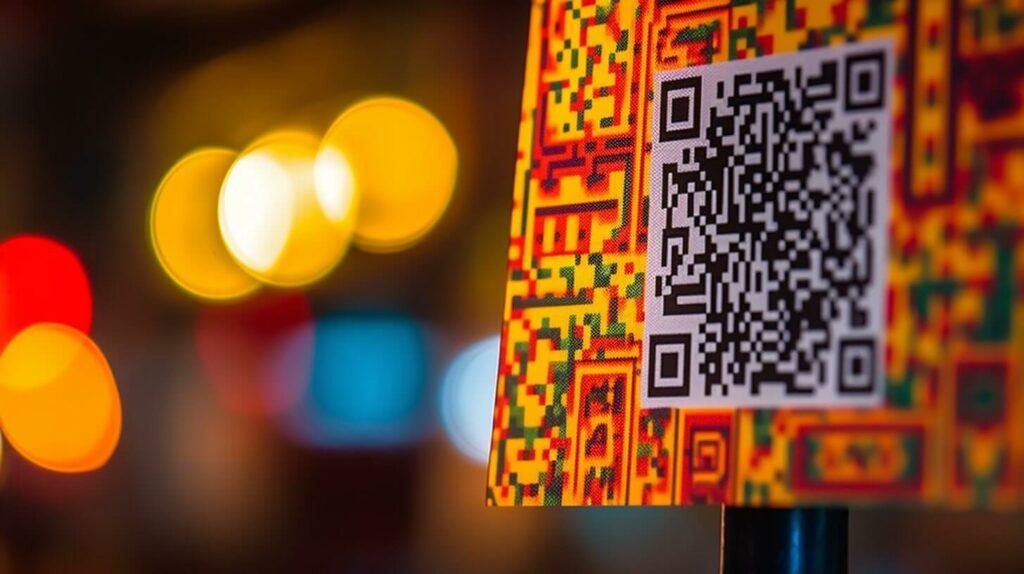
A clear example of this would be an advertising poster featuring a printed QR code. The poster targets a broad audience, and the QR code provides detailed product information when needed.
| Key facts about “Above-the-Line Promotion”While “Above-the-Line Promotion” is necessary, it is generally much more expensive than potential “Below-the-Line measures.” Like “through-the-line promotion,” the latter has the advantage that the results of promotional campaigns can be evaluated much more effectively. |

Step-by-Step Guide to Successful Marketing Promotion
Promotional marketing can pursue many goals. Here are some of the most notable benefits you can gain from a well-thought-out promotional strategy:
- Define a compelling USP
A unique selling proposition (USP) is simply a way to stand out from other companies. A strong USP gives customers a reason to prefer your offering over your competitors’.
To do this, analyze your brand’s strengths and weaknesses to develop a compelling unique selling proposition. Once you’ve established your USP, you can build your promotional marketing strategy. This can also serve as your unique selling proposition if your competitors aren’t implementing any interesting sales initiatives.
- Plan your budget
The size of your budget will influence your advertising and marketing activities. Take stock of the resources available to you for promotion to ensure there are sufficient funds for product development, investments in tools, employee compensation, and covering other expenses.
You may want to consider keeping the budget for advertising and marketing activities low at the start of a campaign and then gradually increasing it based on your audience’s response.
- Define your goals
Once you know your budget, the next step is to identify goals that are achievable within your allocated budget and align with your overall business objectives.
Make sure your goals are specific and that results can be measured over a specific period, such as quarterly or every six months.
For example:
- Gain 100 new social media followers per month.
- Convert 20 percent of attendees at the next event into paying customers.
- Increase the number of email subscribers by 50 percent within six months.
- Know your customer persona
Determine which target audience your marketing campaign is aimed at, and then note:
- What need or desire could your products fulfill?
- What experiences do customers have when using your products?
- What promotional content would attract new customers or re-engage existing ones?
- Choose the right strategy
After considering your budget, goals, and buyer personas, the next step is to finalize your action plan:
- Which marketing channels will you use to reach potential customers?
- What types of promotional activities will you focus on, ranging from personal sales and paid advertising to direct marketing or public relations?
- What specific strategies and tactics will you try?
- Some examples of promotional marketing

There are various ways to conduct promotional marketing both online and offline:
- Host a contest on social media
- Offer giveaways via email
- Create content that informs your audience about new products
- Host a live event
To achieve both short- and long-term goals, various measures are taken, including a variety of live promotional activities at the POS (point of sale):
- Flyers: Distributing flyers, brochures, leaflets, coupon codes, giveaways, and newspapers directly to the target audience is a classic and popular form of promotion. “Flyering” takes place in high-traffic areas such as shopping malls, subway and commuter rail stations, busy streets, and public squares.
- Tastings: These are common in the food industry and take place directly at the point-of-sale (POS) or at trade shows. In this type of promotion, potential customers are invited to try a small, free sample of a new food product to give them an immediate and tasty impression.
- Product presentations: To introduce new products—whether food and beverages or electronic devices—product presentations are often held. During these events, potential customers are directly presented with information about the product’s special features or functions. It is also possible to try out the product yourself or receive free samples to increase the likelihood of a purchase.
Conclusion – Successful Promotional Marketing with Waterproof Web Wizards
At Waterproof Web Wizard, we collaborate with various companies across diverse industries and therefore understand the different types of customers, which we analyze and develop in our strategy sessions with our clients. Perhaps soon with you for your promotional marketing?
We’d be delighted, because your goals are our top priority, which is why we discuss all action plans with you and your team first. That way, we can succeed together.
Learn more about us and our approach through our numerous client testimonials—this will give you a better sense of who we are. Beyond that, we’re specialists in SEO strategies, which are also a crucial part of marketing:
- Brand building
- Local SEO
- Technical SEO
- <adata-wpil href="https://waterproof.agency/blog/lead-agentur-was-ist-das" class="lnk">Lead generation</adata-wpil>
Get in touch with us now: You can reach us by phone at +49 751 95 89 92 17 or send us a message via our contact form.