Wir schreiben über das, was wir täglich für den B2B-Mittelstand bauen: TYPO3, WordPress und datenbasiertes SEO. Ehrlich, technisch fundiert, ohne Funnel.
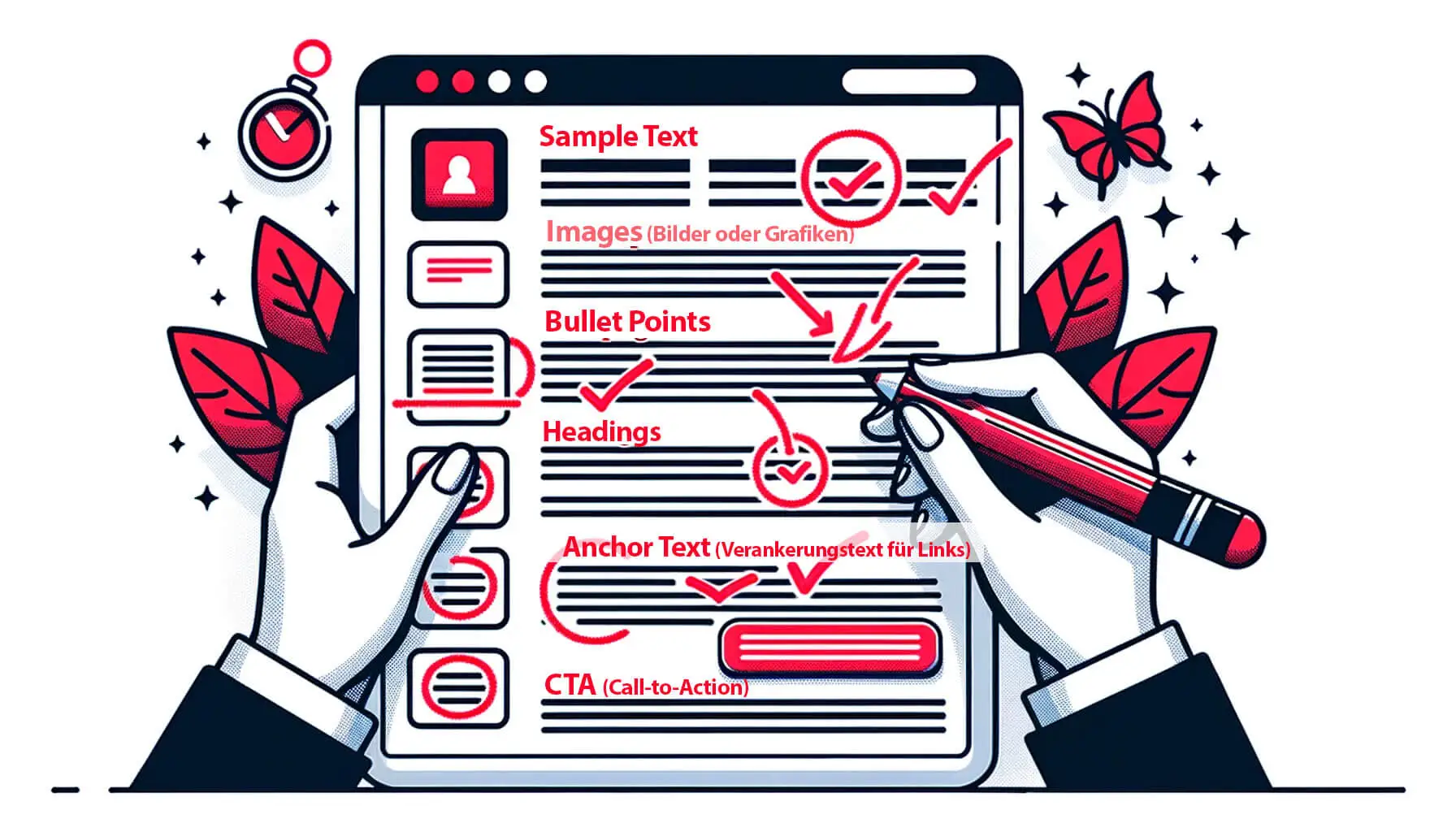
Writing website content sounds easy, but it’s a discipline in its own right that combines SEO, UX, and brand management. Most texts are too long, too generic, or too salesy. We’ll show you the twenty most important rules for turning a blank page into content that customers will read and find compelling.
A website relaunch is rarely just a design project—it’s an investment in the years ahead. If you underestimate the relaunch phase, you’ll lose search rankings, site speed, and sometimes even customers. We’ll show you what kind of preparation is key to a successful relaunch and where typical project disasters tend to occur.
Landing pages often determine whether clicks turn into leads—and this is exactly where most SME projects fall short due to too many elements, unclear CTAs, and generic text. We’ll show you which elements really drive conversions on a landing page and which ones should be removed immediately.
Restaurants compete in Google Maps search—not on the first page of traditional SERPs. If you want local visibility, you need reviews, up-to-date hours, and authentic photos. We’ll show you which SEO strategies really work for the restaurant industry and how you can reach the top spot in your city.
Schema markup is the invisible framework that helps Google correctly categorize your content—FAQs, articles, products, organizations. Without it, rich snippets remain out of reach, and AI overviews give your competitors the edge. We’ll show you which Schema types have the greatest impact for B2B websites and how to implement them correctly.
Marketing promotions might sound like contests and discount campaigns—but in reality, a clear promotional plan determines which target audience you reach and which ones fall by the wayside. We’ll show you how to structure promotional campaigns, which channels work well together, and where the most common budget mistakes lurk.
A local competitor analysis determines your regional SEO strategy—if you only look at your own site, you’ll miss keyword gaps and content opportunities. We’ll show you how to systematically analyze competitors in your region, develop a content plan based on that analysis, and rank faster than you ever could by relying on gut instinct alone.
By 2026, a hacked WordPress site won’t be a rare occurrence—it will be a common occurrence due to poor maintenance. Recovery takes time, damages your reputation, and often costs money. We’ll show you a structured emergency plan: from cleaning up the installation and rotating passwords to analyzing vulnerabilities.
A logo alone doesn’t make a brand—that’s the most common misconception in SME branding projects. True brand-building stems from positioning, tone, visual consistency, and, above all, recognizability in customer interactions. We’ll show you what really matters beyond the logo.
Essential Addons for Elementor is one of the most widely used plugin bundles for WordPress—and in 2024, it had a critical security vulnerability that affected millions of websites. Anyone who uses such plugins without monitoring is operating on blind faith. We’ll show you how to systematically keep track of WordPress plugin risks.
"Digital sales strategy" might sound like a software stack—but it’s first and foremost a strategic decision about channels, messaging hierarchy, and tools. If you prioritize tools over strategy, you’ll waste your budget. We’ll show you the right step-by-step plan and which digital sales components really work for small and medium-sized businesses.
Brand strategy may sound like consultant jargon, but in the day-to-day operations of small and medium-sized businesses, it’s a powerful tool for combating price wars and product interchangeability. Without it, every marketing campaign falls flat. In five steps, we’ll show you how to develop a brand strategy that truly pays off in sales, on your website, and in customer interactions.